
Taste Is Becoming More Valuable, Not Less, in the Age of AI
When execution becomes abundant, selection, restraint, and accountable creative direction become more valuable.
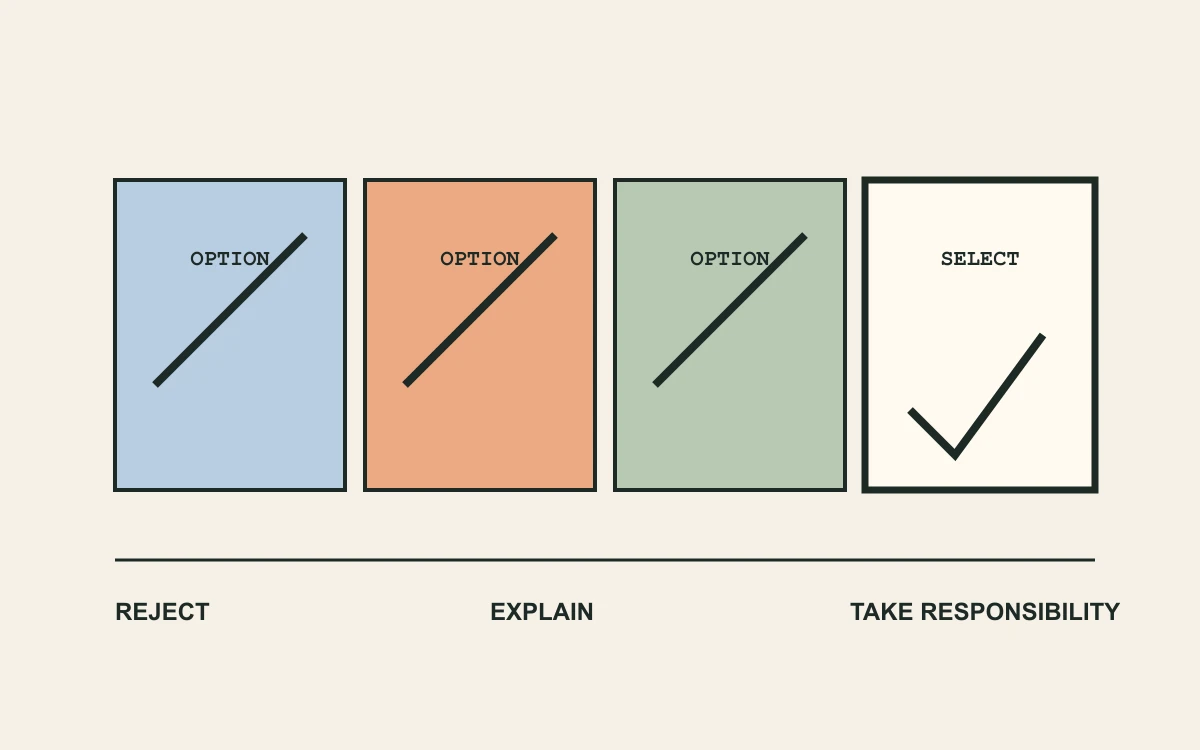
When execution becomes abundant, selection becomes more valuable. Not because every generated thing is bad, and not because human work becomes automatically noble. Abundance changes the bottleneck. The scarce act is increasingly deciding what deserves to exist, what needs another pass, and what must be left out.
That is taste in the useful sense: judgment made visible through selection and restraint.
Competence compression is not authorship
Generative systems compress some kinds of competent execution. They can produce a passable first draft, an image in a familiar style, a neat deck structure, or a list of options in seconds. The result is often legible enough to make refusal feel inefficient.
But competence is not the same as authorship. Authorship includes choosing the problem worth framing, the source material worth trusting, the convention worth refusing, and the consequence a reader is being asked to accept. It includes taking responsibility for the exclusion.
Selection is work
Selection is not scrolling until something feels good. It means setting criteria before the attractive output arrives; comparing alternatives that make genuinely different choices; and naming the trade-off that made one option survive. It means asking what a piece of work assumes about its audience and whether it has earned that assumption.
Rejection is part of the same discipline. A generated option may be polished, coherent, and wrong for the brief. It may repeat a category phrase, borrow a cultural signal without context, make a promise the organisation cannot keep, or merely add more surface where the argument needs a decision. Keeping it because it is usable is how abundance turns into sameness.
Restraint protects the signal
The creative director’s job is not to fill every empty field. Sometimes the right edit is a shorter claim, a missing image, a pause before the conclusion, or a decision to preserve an unresolved contradiction. Restraint gives the audience room to notice what matters. It also makes the work more accountable: fewer decorative moves are available to disguise a weak premise.
This is why editing matters more, not less, when generation is cheap. Editing restores proportion between evidence, idea, and execution. It decides which detail carries the meaning and which flourish is merely evidence that the system had more to say.
Cultural intelligence cannot be automated by style reference
Cultural intelligence is not a bank of references that can be prompted into place. It is the ability to know what a reference means in a situation, who may recognise it, who may be excluded by it, and whether the work has a right to use it. That judgment is relational and accountable. A system can surface possibilities; it cannot inherit the responsibility for their effects.
The same applies to creative direction. A model can offer range. A person still has to decide which direction clarifies the brief, which one dilutes it, and which one should never get as far as a client room.
A practical standard
Before accepting an AI-assisted artifact, ask four questions: What is the specific choice? What was rejected? What evidence or cultural understanding supports the choice? Who is accountable if it lands badly? If the answers are vague, more generation will usually make the vagueness more persuasive.
Taste is not a private instinct beyond challenge. It is a practice of making decisions contestable: showing the source, stating the refusal, explaining the trade-off, and remaining responsible for the result. In an abundant field, that may be the most valuable form of creative labour.
Practical resources
Evidence ledger
Sources
Links are descriptive and separated from editorial conclusions. Product behavior may change after the review date.
Next methods
Continue the work
guide · methods
How to Use AI Without Producing Generic Creative Work
A divergence-and-critique framework that protects a specific point of view.
guide · methods
How to Review AI-Generated Creative Work Without Losing Your Taste
An eight-lens creative review framework for choosing, editing, and rejecting generated work.